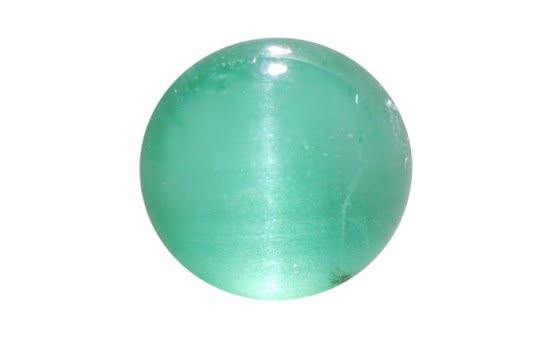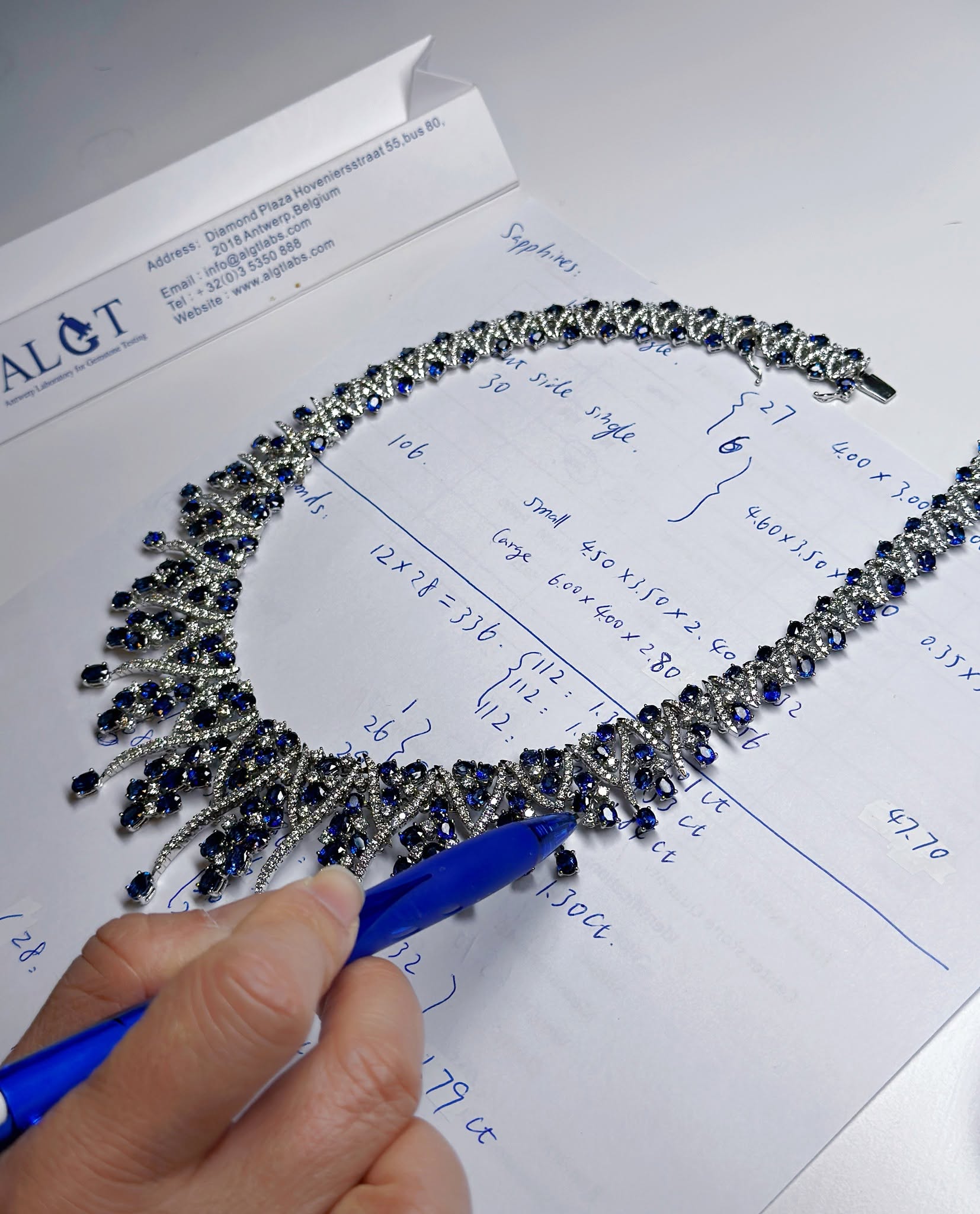

This amazing 3.03 cts and 3.15 cts demantoid pair originated from Russia was recently brought in ALGT for research. Since Russian demantoid often occurs as small grains with no well-developed crystal forms in the matrix, any faceted stone above one carat is considered rare. Demantoid is found in two types of geological deposits: contact metamorphic skarn-type and serpentinite-type.
These two demantoids were analysed at ALGT(Antwerp) with standard gemmological tools including a dark field microscope, Raman, UV-Vis-NIR. The chemical composition of both samples was measured by energy-dispersive X-ray fluorescence (EDXRF) spectroscopy.
Raman gave us results consistent with the reported physical properties for demantoid.
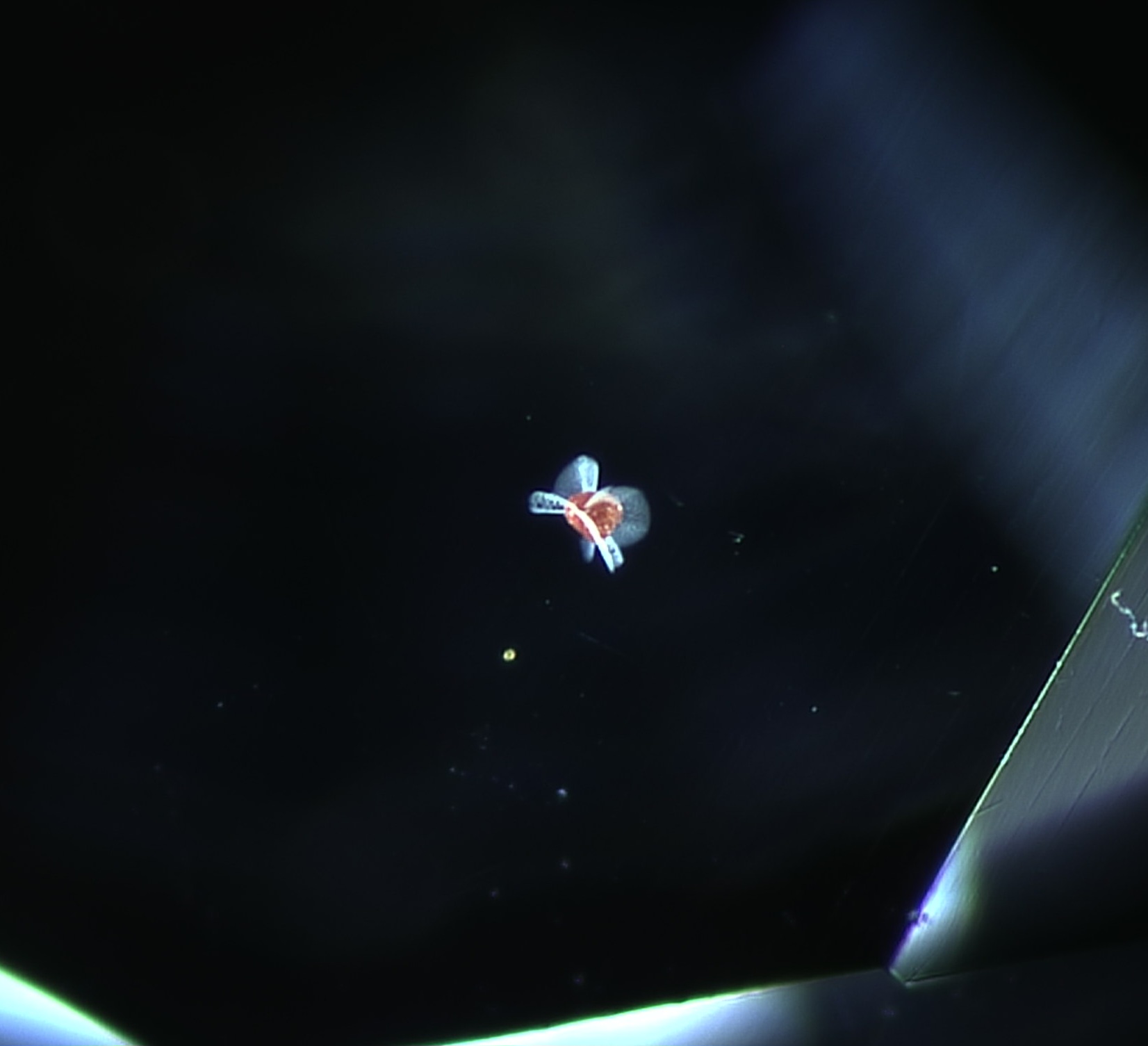
In both samples, the long, thin, curved chrysotile fibers (horsetails) characteristic of Russian demantoid were present.
The spectra of both samples were dominated by Cr3+ absorption bands at 625 and 640 nm , consistent with demantoid from other serpentinite-hosted deposits (e.g. China, Slovakia and Kerman in Iran, Italy, Pakistan). Both samples also showed very strong Fe3+ absorption between 430 and 450 nm.
EDXRF chemical data for the demantoid samples are presented in Figure 21-22. Fe was the predominant transition metal in the samples, followed by Cr, Mn, V and Ti.
Many thanks to Alexander from Baronian & Fils SA for his continuous support and for providing us with fantastic samples for our research department!
These two demantoids were analysed at ALGT(Antwerp) with standard gemmological tools including a dark field microscope, Raman, UV-Vis-NIR. The chemical composition of both samples was measured by energy-dispersive X-ray fluorescence (EDXRF) spectroscopy.
Raman gave us results consistent with the reported physical properties for demantoid.
In both samples, the long, thin, curved chrysotile fibers (horsetails) characteristic of Russian demantoid were present.
The spectra of both samples were dominated by Cr3+ absorption bands at 625 and 640 nm , consistent with demantoid from other serpentinite-hosted deposits (e.g. China, Slovakia and Kerman in Iran, Italy, Pakistan). Both samples also showed very strong Fe3+ absorption between 430 and 450 nm.
EDXRF chemical data for the demantoid samples are presented in Figure 21-22. Fe was the predominant transition metal in the samples, followed by Cr, Mn, V and Ti.
Many thanks to Alexander from Baronian & Fils SA for his continuous support and for providing us with fantastic samples for our research department!
Gallery
Click any image to enlarge